



AIKON Article Details | AIKON
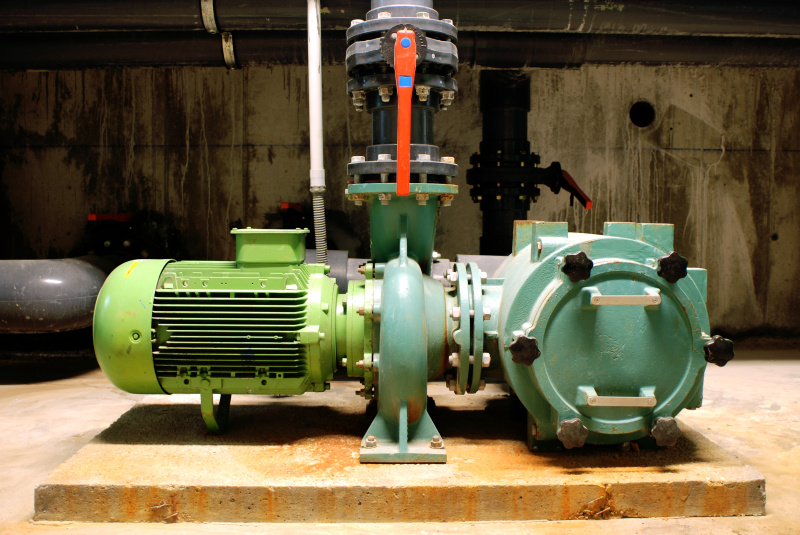
The main performance parameters of centrifugal pumps
2025-01-24 13:48:18
As a common fluid conveying device, centrifugal pumps are widely used in many fields such as industry, agriculture, and municipal administration. Understanding the main performance parameters of centrifugal pumps is crucial for the correct selection, installation, and operation of centrifugal pumps. The following are several key performance parameters of centrifugal pumps.
Flow rate refers to the volume of liquid delivered by a centrifugal pump per unit of time. It is usually denoted by the symbol Q, and the units are cubic meters per hour () or liters per second (L/s). The flow rate is an important indicator for measuring the conveying capacity of a centrifugal pump. Different application scenarios have different requirements for the flow rate. For example, in large - scale chemical production, centrifugal pumps with a large flow rate are needed to meet the requirements of continuous production, while in small - scale irrigation systems, the flow rate requirement is relatively small.
Head refers to the height that a centrifugal pump can lift water, denoted by the symbol H, with the unit of meters (m). It reflects the work done by the centrifugal pump on the liquid and is used to overcome the resistance during the liquid transportation process, including pipeline resistance and elevation difference. In practical applications, it is necessary to determine an appropriate head according to the height of the conveyed liquid and the resistance of the pipeline system. If the selected head is too small, the centrifugal pump cannot deliver the liquid to the specified height. If the head is too large, it will cause energy waste and an increase in equipment costs.
Power refers to the energy consumed by a centrifugal pump during operation, which is divided into effective power, shaft power, and matching power. The effective power is the power obtained by the liquid from the centrifugal pump. The shaft power is the power required by the pump shaft, and the matching power is the power of the motor that drives the centrifugal pump. The efficiency of a centrifugal pump is the ratio of the effective power to the shaft power, which reflects the ability of the centrifugal pump to convert input power into output power. The higher the efficiency, the smaller the energy loss during the operation of the centrifugal pump, and the lower the operating cost.
Speed is the number of revolutions of the impeller of a centrifugal pump per minute, denoted by the symbol n, with the unit of revolutions per minute (r/min). The speed has a significant impact on the flow rate, head, and power of the centrifugal pump. Generally, when the speed increases, the flow rate and head will increase accordingly, but the power will also increase. When selecting the speed of a centrifugal pump, factors such as the performance of the pump, the matching of the motor, and the service life of the equipment need to be comprehensively considered.
These performance parameters are interrelated and jointly determine the working capacity and efficiency of the centrifugal pump. In practical applications, only by reasonably selecting the performance parameters of the centrifugal pump according to specific working conditions can the centrifugal pump operate efficiently and stably, achieving the best economic and social benefits.