



AIKON Article Details | AIKON

Digital and Analog Quantities: The Cornerstones of the Electronic World
2024-12-13 11:06:35
In numerous fields such as electronic technology, automatic control, and communications, we often hear the terms "digital quantity" and "analog quantity," which are like the cornerstones of the entire electronic information edifice. Today, let's delve deeper into these two important and somewhat mysterious concepts.
I. Analog Quantity: The World of Continuity
Definitions & Characteristics
The analog quantity is a direct mapping of various continuously changing physical quantities in nature. It can take any real value within a certain range and is characterized by continuity. Just like the change in temperature we experience in our daily lives, it doesn't jump from 20°C to 30°C all at once but goes through an infinite number of intermediate values such as 20.1°C, 20.11°C, 20.2°C, and so on. Physical quantities like the intensity of sound, the brightness of light, and the pressure on an object are all essentially analog quantities. Moreover, the analog quantity has a direct proportional relationship with the actual physical quantity. For example, in a pressure measurement system, the magnitude of the pressure is directly proportional to the voltage or current analog signal output by the sensor.
Oscilloscope Curve Characteristics
When we connect an analog quantity signal to an oscilloscope, we will see that its curve changes continuously. For example, a common sine wave analog signal presents a smooth curve like a ribbon on the oscilloscope, with the voltage value fluctuating continuously and gracefully according to the sine function with respect to time, without any abrupt breaks or jumps.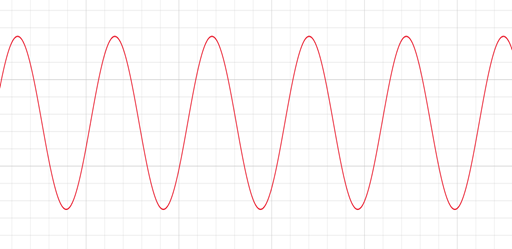
Application Scenarios
In the field of sensors, the analog quantity plays a significant role. For instance, a thermistor converts the analog quantity of temperature into a corresponding continuously changing voltage or current signal through its own resistance changing continuously with temperature, allowing us to measure environmental temperature, object temperature, etc. In traditional audio and video systems, the sound signals collected by microphones and the image signals captured by video cameras are initially in the form of analog quantities, carrying rich and continuously changing information.
Challenges and Limitations
However, the analog quantity is not without flaws. Due to its continuously changing nature, it is highly susceptible to noise, electromagnetic interference, and other factors during transmission and processing, leading to signal distortion. Imagine that during the long-distance transmission of an analog audio signal, various interfering signals may get mixed in, resulting in the sound we finally hear being mixed with noise and seriously affecting the sound quality. Additionally, the processing and storage of analog quantities are relatively complex and require more precise and sophisticated analog circuits to ensure the accuracy and stability of the signals.
II. Digital Quantity: The Wisdom of Discreteness
Definition and Characteristics
In contrast to the analog quantity, the digital quantity is discrete. It can only take a limited number of specific values. In a common binary digital system, it usually represents information with the two basic values of 0 and 1 or sequences of codes composed of 0 and 1. This discreteness gives the digital quantity strong anti-interference ability. As long as the interference such as noise does not cause the signal level to exceed its effective logic threshold range, it will not affect the information it carries. For example, in a digital circuit, as long as the low level representing logic 0 and the high level representing logic 1 can be clearly distinguished, the digital signal can be accurately identified. Meanwhile, the digital quantity is easy to process and store. Digital circuits such as logic gate circuits and flip-flops can easily perform logical and arithmetic operations on it, and digital storage devices like registers and memories can conveniently store digital quantity data.
Oscilloscope Curve Characteristics
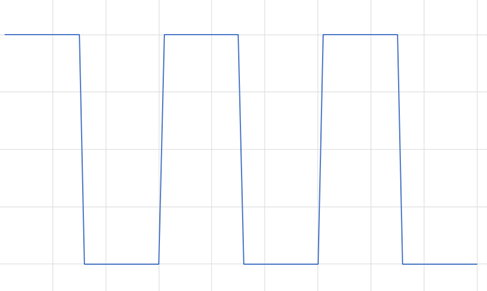
When observing a digital quantity signal on an oscilloscope, you will find that it presents a regular and discrete form. For example, a simple digital logic signal (such as a square wave signal) is like a staircase with distinct steps. It remains at a high level (e.g., 5V) for a period of time, appearing as a straight line parallel to the horizontal axis (time axis) on the oscilloscope, and then instantaneously jumps to a low level (e.g., 0V) at a certain moment, forming another straight line parallel to the horizontal axis, and after a period of time, jumps back to the high level again, repeating this cycle, with each transition edge of the level being very steep.
Application Scenarios
In digital circuit systems, digital quantities are ubiquitous. The data bus and address bus inside a computer all transmit digital quantities, which convey various instructions and data in the form of binary codes, enabling the computer to perform various complex operations and data processing at high speed and with accuracy. In the field of industrial control, various switch signals such as the start/stop of equipment and the open/close of valves can all be represented by digital quantities, which are simple and reliable.
Advantages and Development
The advantages of digital quantities have led to their wide application and rapid development in modern technology. With the continuous advancement of digital technology, more and more analog quantities are gradually being converted into digital quantities for processing. For example, after converting an analog signal into a digital signal through an analog-to-digital converter (ADC), it is sent to a computer or a digital signal processor (DSP) for processing, which can utilize the powerful functions of digital technology to improve the accuracy, reliability, and flexibility of signal processing.
III. The Synergistic Coexistence of Digital and Analog Quantities
In actual engineering applications and technological development, digital and analog quantities do not exist in isolation but cooperate with and complement each other. Many systems involve both the acquisition and preliminary processing of analog quantities and the in-depth calculation and control decisions of digital quantities. For example, in an intelligent temperature control system, first, the analog temperature signal is obtained through a temperature sensor, then converted into a digital quantity through analog-to-digital conversion and input into the controller. The controller makes logical judgments and operations based on the digital temperature information and finally converts the digital control signal back into an analog quantity through digital-to-analog conversion to control the operation of heating or cooling equipment.
It can be said that digital and analog quantities are like the yin and yang poles of the electronic world. Their respective characteristics and advantages jointly drive the continuous development of fields such as electronic technology, automatic control, and communications, bringing us one technological miracle after another.