



AIKON Article Details | AIKON
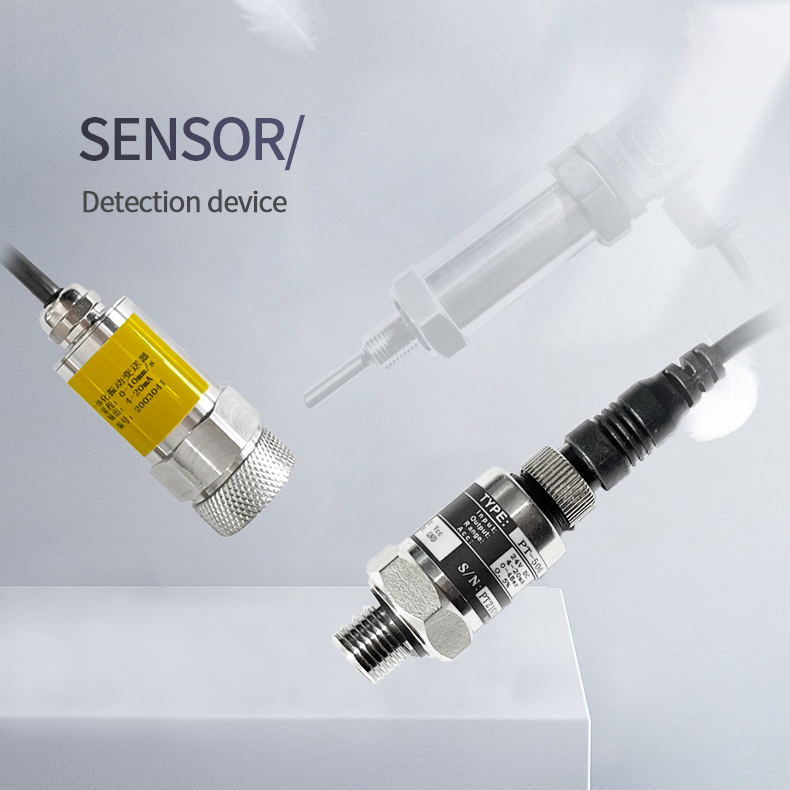
Common Errors and Solutions When Connecting a Pressure Sensor to a Frequency Converter
2024-12-20 17:03:39
In industrial automation, the combination of frequency converters and pressure sensors is widely used. However, improper installation and debugging may lead to common issues that affect normal equipment operation. Here are several typical errors and their solutions:
1. Incorrect Jumper Cap Settings
Many pressure sensors allow selecting the signal type (e.g., 4-20mA current signal or 0-10V voltage signal) using jumper caps. Incorrect jumper cap settings may cause the frequency converter to fail to receive the correct signal, resulting in abnormal pressure readings or no output at all.
Solution: Carefully read the sensor's user manual before wiring to ensure that the jumper cap position matches the intended signal type.
2. Wiring Errors
Common wiring errors include reversed polarity of signal wires, ungrounded shield wires, or mixing up signal wires with power wires. These issues may cause signal interference, no output, or even equipment damage.
Solution: Strictly follow the wiring diagrams of the sensor and frequency converter to ensure proper connections for signal wires, power wires, and shield wires.
3. Power Supply Mismatch
Pressure sensors typically require a specific supply voltage (e.g., 24V DC). Incorrect supply voltage—either too high or too low—can prevent the sensor from functioning properly.
Solution: Use a power supply that meets the sensor's specifications and ensure stable power delivery.
4. Signal Mismatch
The signal type output by the pressure sensor must match the input type accepted by the frequency converter. For example, if the frequency converter only accepts voltage signals but the sensor outputs a current signal, it will not be able to read the pressure correctly.
Solution: Choose a compatible sensor based on system requirements or use a signal conversion module.
5. Environmental Interference
Long-distance signal transmission between the pressure sensor and the frequency converter can be affected by electromagnetic interference, causing signal distortion.
Solution: Use shielded signal cables and ensure the shielding layer is grounded. Additionally, avoid routing signal cables parallel to high-power lines.
By carefully checking jumper cap settings, wiring, and signal compatibility, and implementing effective anti-interference measures, potential issues during installation and use can be minimized, ensuring the stable operation of the frequency converter and pressure sensor system.