


AIKON Article Details | AIKON
Classification of Pumps 2
2024-12-20 16:57:09
Pumps categorized in other ways are described below.
1. Classification by Application
1.1 Water Supply Pumps
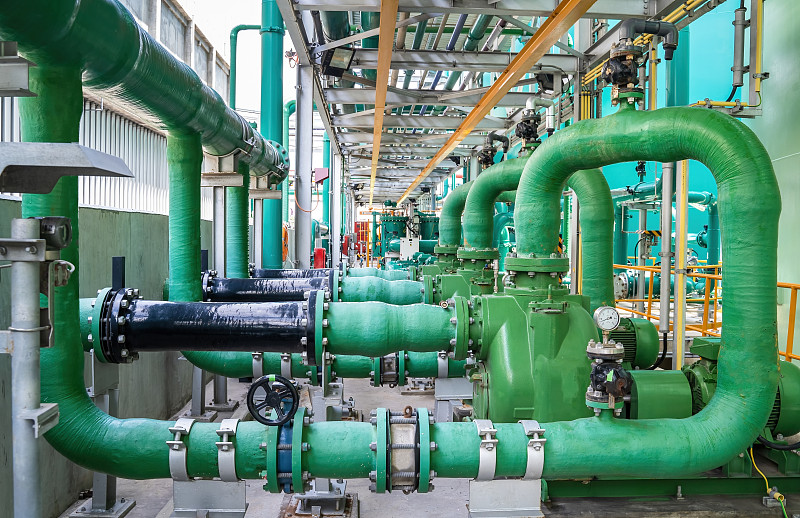
Water supply pumps are mainly used to provide the required water volume and pressure for residential life, industrial production, and so on. As mentioned earlier, centrifugal pumps, axial flow pumps, and mixed flow pumps are widely used in water supply systems. Different types and specifications of pumps can be selected according to the scale and requirements of water supply. In urban water treatment plants, large centrifugal pumps are usually used to lift water from the water source to the plant for treatment. Then, through multi-stage centrifugal pumps or other suitable pumps, the treated water is transported to the water supply networks in various urban areas to meet the daily water needs of residents.
1.2 Sewage Pumps
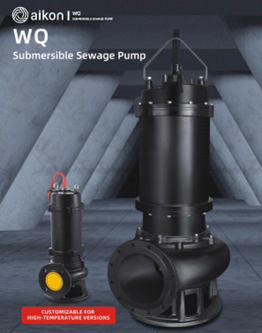
Sewage pumps are specifically designed to transport liquids containing solid impurities, fibers, sewage, and so on. Due to the complex nature of sewage, which contains various debris, the structural design of sewage pumps needs to consider factors such as anti-clogging and wear resistance. Generally, open impellers or impellers with special cutting devices are used, which can cut solid particles in sewage to ensure the normal operation of the pump. Sewage pumps are commonly used in urban sewage treatment plants, construction sites, basement drainage, and other occasions to transport sewage to treatment facilities or designated locations for treatment or discharge.
1.3 Fire Pumps
Fire pumps are key equipment in fire protection systems and are used to provide sufficient water pressure and volume to meet the needs of fire extinguishing when a fire occurs. Fire pumps usually require characteristics such as high reliability, rapid start-up, large flow, and high head. Generally, centrifugal pumps are used and equipped with dedicated fire motors and control systems, which can quickly start and operate stably after receiving a fire alarm signal. Fire pumps are widely used in fire protection facilities of various buildings, factories, warehouses, and other places and are one of the important equipment to ensure the safety of life and property.
1.4 Oil Pumps
Oil pumps are mainly used to transport various petroleum products, such as gasoline, diesel, lubricating oil, and so on. Different types of oil pumps can be selected according to the nature of the transported oil products and the working conditions. For example, gear pumps are often used to transport high-viscosity lubricating oil, while centrifugal pumps are suitable for transporting light oil products such as gasoline and diesel. Since petroleum products are flammable and explosive, oil pumps need to meet strict explosion-proof and fire-proof safety standards during design and manufacturing. At the same time, corresponding safety measures need to be taken during installation and use.
1.5 Metering Pumps
Metering pumps can accurately control the flow rate of liquid transportation and can achieve functions such as quantitative transportation and proportional transportation according to process requirements. Plunger pumps are one of the common types of metering pumps. By adjusting the stroke of the plunger or the rotation speed of the pump, the liquid flow rate can be accurately adjusted. Metering pumps are widely used in the chemical, pharmaceutical, food, and other industries to accurately add various chemical agents, additives, and raw materials to ensure the accurate ratio and stable product quality during the production process.
2. Classification by Pump Shaft Position
2.1 Horizontal Pumps
The pump shaft of horizontal pumps is arranged horizontally. This structural form makes the installation and maintenance of the pump relatively convenient. The pump body can be directly installed on the foundation plane, facilitating inspection and replacement of parts. Horizontal centrifugal pumps, horizontal axial flow pumps, and so on are widely used in industrial and civil fields. For example, the circulating water systems of factories and urban water supply pump stations usually adopt horizontal pumps.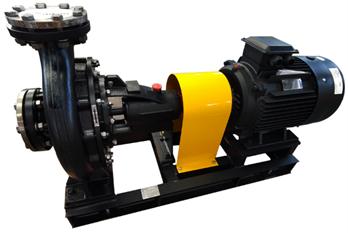
2.2 Vertical Pumps
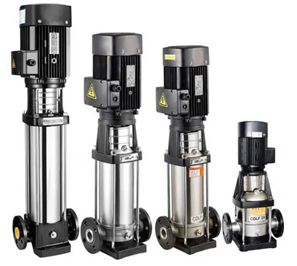
The pump shaft of vertical pumps is perpendicular to the ground. Vertical pumps have the advantage of occupying a small area and are suitable for occasions with limited space. For example, in deep well water extraction and high-rise building water supply applications, vertical deep well pumps and vertical multi-stage centrifugal pumps can effectively utilize vertical space to lift water from the deep well to the ground or transport it to a high place. In addition, some large axial flow pumps also adopt a vertical structure and are used for the construction of large pump stations in water conservancy projects.