


AIKON Article Details | AIKON
Classification of Pumps 1
2024-12-13 12:15:58
Pumps, as general-purpose machinery widely used in numerous fields such as industry, agriculture, construction, and daily life, play an indispensable role in liquid transportation, water level elevation, and pressure provision. They come in a wide variety of types and can be classified into multiple categories based on different working principles, structural characteristics, and application scenarios. The following will provide a detailed introduction to the common classifications and characteristics of pumps.
1. Classification by Working Principle
1.1 vane pump
Vane pumps are pumps in which the impeller is a vane and the liquid is transferred under the rotation of the vane.
1.1.1)Centrifugal Pumps
Centrifugal pumps are the most common type of pumps. Their working principle is based on centrifugal force. When the impeller of the pump rotates at high speed, the liquid inside the pump is driven to rotate at high speed by the impeller. Under the action of centrifugal force, the liquid is thrown towards the edge of the impeller and flows along the flow passage of the pump casing to the outlet. At the same time, a low-pressure area is formed at the center of the impeller, enabling the external liquid to be continuously sucked into the pump, thus realizing the continuous transportation of liquid. Centrifugal pumps have the advantages of continuous and uniform flow, relatively convenient adjustment, and a wide range of applications. They can be used to transport clear water, various corrosive liquids, and suspensions containing solid particles. They are commonly used in urban water supply, industrial cooling circulation water systems, agricultural irrigation, and other fields.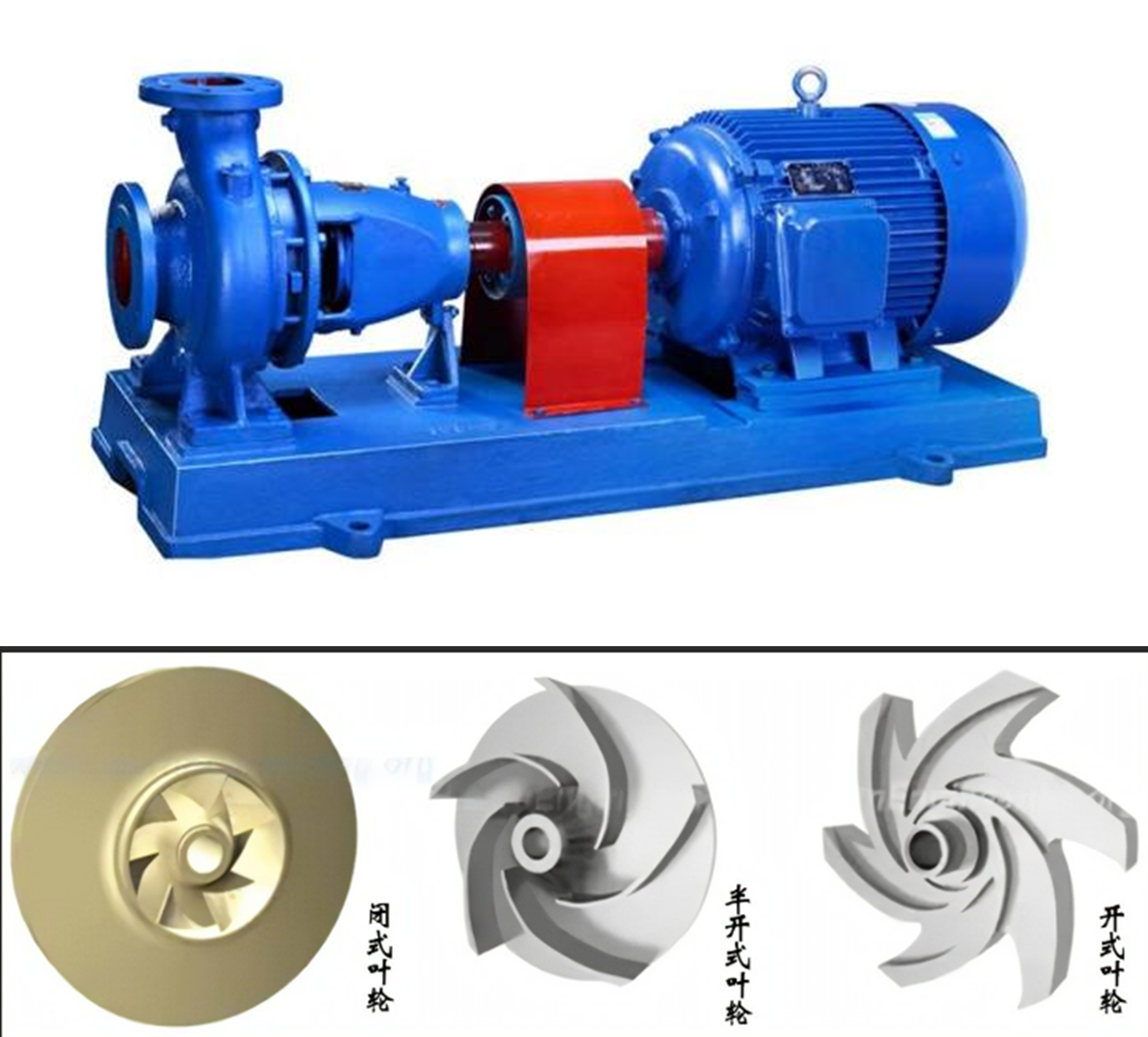
1.1.2)Axial Flow Pumps
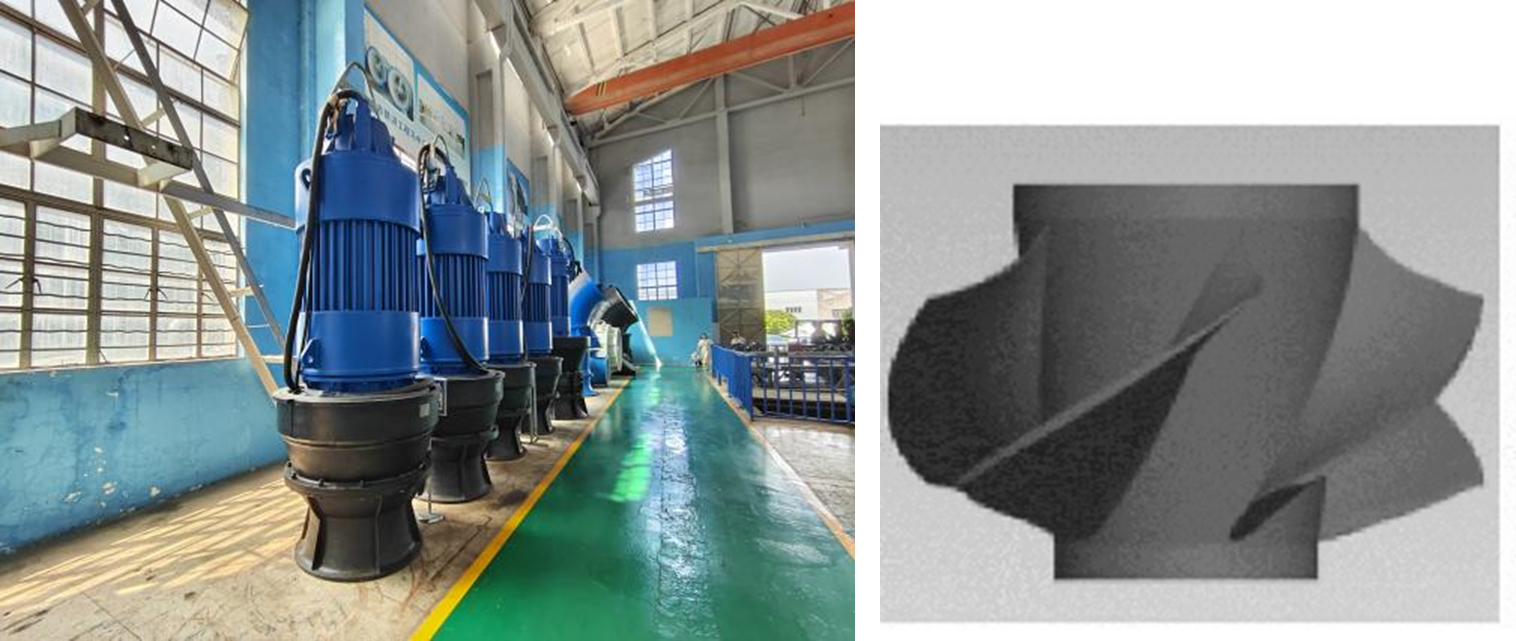
The working principle of axial flow pumps is to rely on the axial thrust generated by the rotation of the impeller on the liquid to transport the liquid. The liquid enters the pump body axially and flows out of the pump body at high speed along the axial direction under the push of the impeller blades. Axial flow pumps are characterized by large flow, relatively low head, and high efficiency. They are suitable for applications with large flow and low head, such as farmland drainage and irrigation, urban drainage, and water intake pump stations in large water conservancy projects. The impeller of an axial flow pump is generally in the form of a propeller and has a special shape that can effectively push a large amount of liquid to flow.
1.1.3)Mixed Flow Pumps
Mixed flow pumps combine the working characteristics of centrifugal pumps and axial flow pumps. The flow of liquid in the impeller has both radial movement under the action of centrifugal force and axial thrust. Their performance is between that of centrifugal pumps and axial flow pumps, with relatively moderate head and flow. They are suitable for occasions with medium head and flow and are also widely used in agricultural irrigation, urban water supply, and other fields. The impeller of a mixed flow pump has a unique shape, with twisted blades to achieve the mixed flow of liquid in the pump.
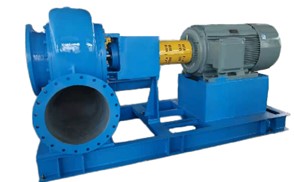
At present, the main products of the SHANGHAI PUMPING TECH INTERNATIONAL CO.,LTD are vane pumps, followed by the introduction of another type of water pump.
1.2. Positive Displacement Pumps
Positive displacement pumps rely on the periodic movement of working elements to change the volume of the pump chamber to achieve the suction and discharge of liquid. Common positive displacement pumps include gear pumps, plunger pumps, and screw pumps.
1.2.1)Gear Pumps: Through the rotation of two meshing gears in the pump casing, liquid is sucked in from one side. As the gears rotate, the liquid is carried to the other side and squeezed out of the pump body. Gear pumps have the characteristics of simple structure, strong self-priming ability, and small flow pulsation. They are often used to transport high-viscosity liquids, such as the transportation of lubricating oil and fuel in the petrochemical industry.
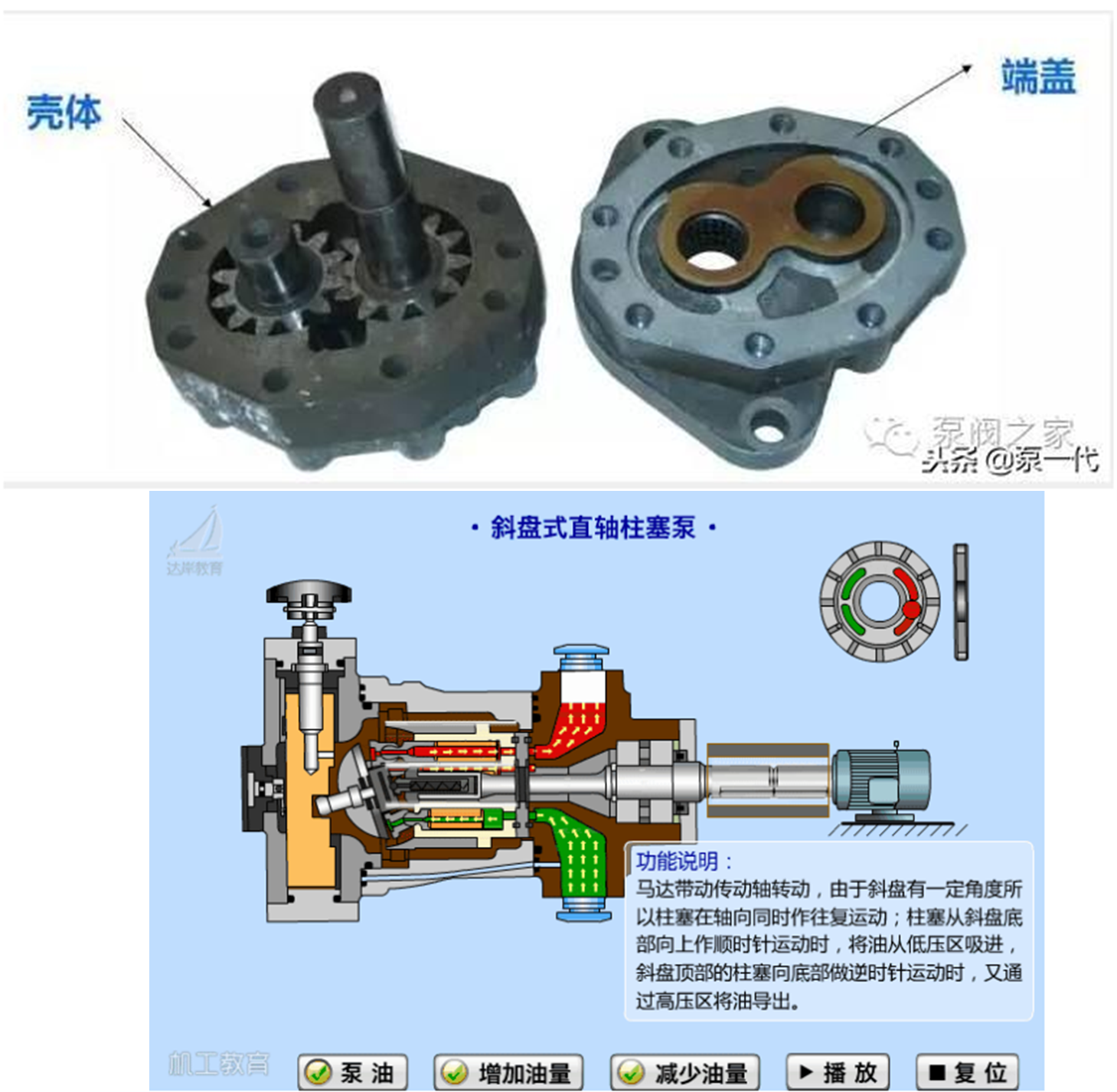
1.2.2)Plunger Pumps: Utilize the reciprocating movement of the plunger in the pump cylinder to change the volume of the pump cylinder for sucking in and discharging liquid. Plunger pumps can provide relatively high pressure and are suitable for high-pressure, small-flow applications, such as high-pressure liquid transportation and metering pumps in the petrochemical industry. Their structure is relatively complex, with high precision requirements, but they work reliably and have a wide pressure adjustment range.
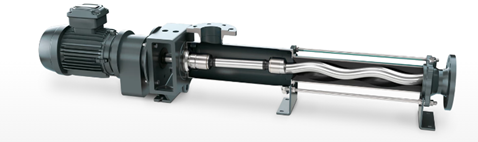
1.2.3)Screw Pumps: One or more screws rotate in the pump casing, causing the liquid to be pushed forward along the spiral groove of the screw. Screw pumps have the advantages of uniform flow, stable pressure, low noise, and strong self-priming ability. They can transport liquids of various viscosities and are particularly suitable for transporting high-viscosity media containing solid particles or fibers. They are widely used in the food, chemical, and sewage treatment industries.