



AIKON Article Details | AIKON
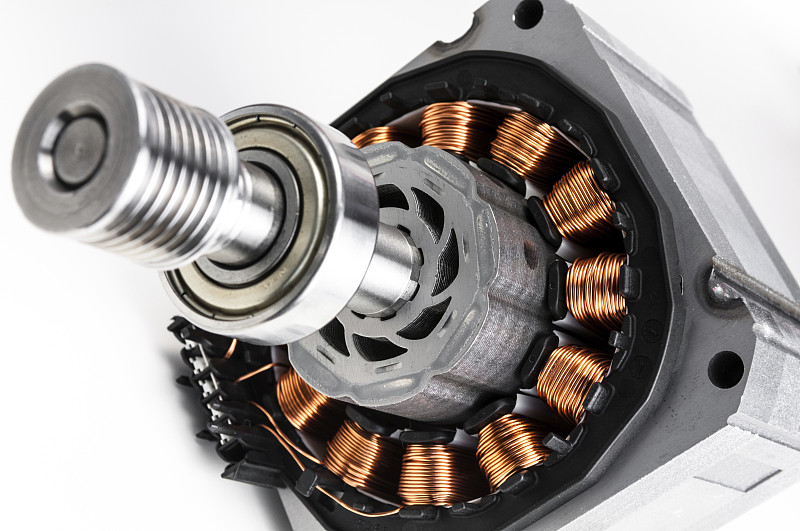
Why is the starting current of an electric motor 5 to 8 times its rated current?
2025-02-28 16:49:50
In summary:The motor's starting current is 5-8 times the rated current due to rotor's zero speed, design, and load factors.
When we press the motor start button, we often find that the motor current surges instantaneously, reaching 5 to 8 times the rated current. What is the principle behind this phenomenon? Today, let's uncover the mystery.
I. The state of the motor at startup
When a motor is running normally, it is like a car already driving on a flat road, with all components in a relatively stable working state. The rotor rotates under the action of the rotating magnetic field generated by the stator, and at this time, the motor current is also relatively stable, basically maintaining the level of the rated current.
However, when the motor starts, the situation is quite different. It is like a car that suddenly needs to rush out from a stationary state, having to overcome many resistances. At the moment of motor startup, the rotor is stationary, the stator winding starts to conduct electricity, and a strong magnetic field is generated. This magnetic field has to overcome the rotor's stationary inertia and drag the rotor to start rotating.
II. The absence of back EMF
When a motor is running normally, the rotor cutting magnetic lines of force generates a back EMF, which is opposite to the power supply voltage and offsets part of the power supply voltage, thus preventing the motor current from being too large. It can be imagined as a "braking" device that limits the size of the current.
However, at the moment of motor startup, since the rotor has not started to rotate, there is no relative motion to generate back EMF. This is equivalent to losing the "braking" function, and the power supply voltage almost entirely acts on the motor windings, causing the current to increase sharply, which is the starting current we see is 5 to 8 times the rated current.
III. Motor design and manufacturing factors
The design and manufacturing process of a motor also affect the starting current. To ensure that the motor can start normally under various loads, the starting torque of the motor needs to be large enough. This requires the motor's winding turns, wire diameter, and magnetic circuit design to meet certain requirements. These design factors determine the range of the motor's starting current to a certain extent.
For example, some small motors, due to size limitations, have relatively larger winding resistance, and the starting current may be larger; while large motors, although the winding resistance may be smaller, need to drive larger loads, and the starting current will not be small either.
IV. The impact of load
The load that the motor carries at startup also affects the starting current. If the motor starts with a heavy load, it is like trying to accelerate a fully loaded car instantaneously, requiring a greater force to push, and the motor needs a larger current to provide enough torque to overcome the load resistance.
On the contrary, if the motor starts with a light load, the starting current will be relatively smaller. Therefore, in practical applications, we will take some measures to reduce the starting current according to the different loads carried by the motor, such as using soft start devices or star-delta starting methods.
In conclusion, the starting current of a motor being 5 to 8 times its rated current is the result of the combined effects of multiple factors. Understanding this principle helps us better use motors in production and daily life, and avoid damage to motors and power grids due to excessive starting current.